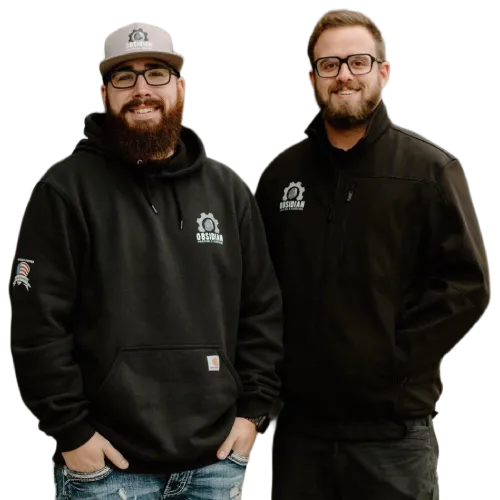
Obsidian Heating and Cooling owners

Gas Piping Repair in Des Moines, IA

If your furnace, boiler, or gas appliance isn't getting fuel, the problem could be a loose connection, a small leak, or a damaged section of gas piping. At Obsidian Heating and Cooling, our veteran-owned team responds to gas line emergencies across Ankeny, Urbandale, Altoona, Grimes, and Clive. We diagnose the issue, replace corroded or damaged pipe, tighten loose fittings, and pressure-test the system to ensure it's airtight. Your heating system is only as reliable as the gas supply feeding it — when that supply fails, you need someone who can fix it fast.

Veteran Owned
15+ Years of Experience
24/7 Emergency Service
Tempstar Elite Dealer
Up to 15-Year Warranty
Parts & Labor
Why Choose Obsidian
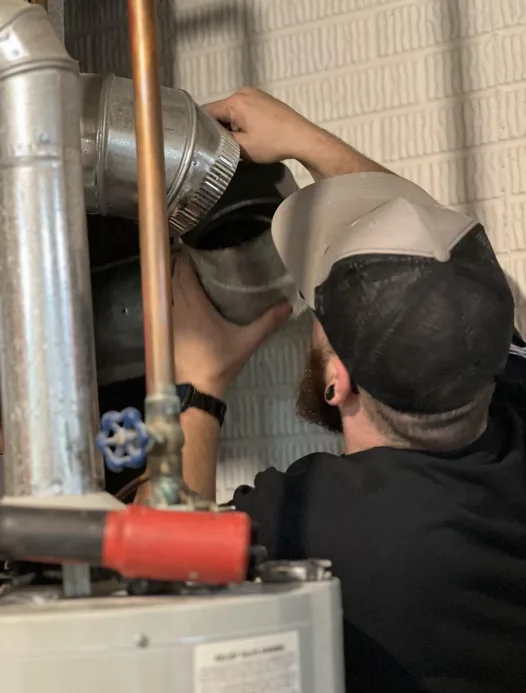
Technician repairing a residential gas line and flue connection

Why Trust Obsidian for Gas Piping Repair

We've handled gas leaks, failed connections, corroded pipe, blocked lines, and fuel delivery issues in hundreds of homes across central Iowa. We know where problems hide — in basements, crawl spaces, walls, and under porches — and how to find them quickly using professional gas detection equipment and pressure testing. We don't guess or replace entire systems unnecessarily — we test, locate, and fix the real issue with precision. For new line runs or full replacements, see our gas piping installation services.

As a veteran-owned company, we give you straight answers about what needs fixing. Not every gas line problem requires full replacement — sometimes it's a simple tightening, resealing a bad joint with proper sealant, or replacing a single corroded section. We only recommend what you actually need, explain the problem clearly, and provide a detailed estimate before work begins.

We know a furnace that won't light is urgent, especially during heating season when you're out of heat. We dispatch technicians quickly, keep emergency tools and parts in stock, and often complete repairs without a second visit. Call us at 515-599-8488 anytime you notice a gas problem — day or night, weekday or weekend.

We pressure-test every repair using professional equipment — nitrogen isolation test, pressure gauge monitoring, and live gas smell test using detection solution. Only when the system is airtight and your appliance runs normally do we call the repair complete. You get a written report of our findings, test results, and recommendations for future maintenance.

All our work meets current local and state code standards. If a repair involves modifying the piping or connections, we pull a permit if required by your city and ensure the final work passes inspection. Your system is professionally documented, certified, and protected by our warranty.

Need Gas Piping Repair?

Whether you smell gas, your furnace won't light, or you have a known leak, we're ready to help. We provide emergency repairs with same-day response when possible.

Related services: Gas Piping Installation | Furnace Repair | Boiler Repair

Warning Signs

Signs Your Gas Piping Needs Repair

Don't ignore these warning signs. Gas line problems can be safety hazards that require immediate professional attention.

If you hear a hissing or whistling noise near a gas connection or fitting, pressurized gas is escaping into the air. This is a leak — stop using the appliance immediately and call us. A small leak can become dangerous quickly and reduces the fuel supply to your equipment, causing weak burner flame or inability to ignite. Gas leaks also increase fire and explosion risk. Don't ignore this sound.

Natural gas is odorless, so utility companies add mercaptan — a chemical that smells like rotten eggs — to make leaks detectable. If you smell this distinctive odor, it's a leak somewhere in the system. Exit your home, don't use electronics (they can spark), don't light matches or smoke, and call your gas utility or us immediately from outside. This is a safety emergency.

If your furnace or boiler clicks repeatedly trying to ignite but never catches, the problem might be low gas pressure from a leak, a partially blocked line, a bad regulator, or a failed connection at the appliance. We check the gas supply at your meter, test for blockages in the line, check pressure throughout the system, and diagnose whether it's a piping problem or an equipment issue inside the furnace or boiler.

Black iron gas pipe can corrode over time, especially in basements with moisture, crawl spaces, or damp utility rooms. Corrosion weakens the pipe wall and can lead to pinhole leaks. If you see rust, orange discoloration, white powder, or pitting on the pipe, have us inspect it immediately. Corroded sections need replacement before they fail completely.

If your furnace or boiler burner flame is weak, yellow instead of bright blue, or uneven across the burner, you may have low gas pressure from a leak or blockage, or a regulator problem. Low pressure reduces heating output, makes the system less efficient, and can eventually cause the burner to fail to ignite. We test the pressure throughout the system, clear blockages, adjust regulators, and identify whether pipe sizing or a connection is the problem.

If a section of exposed gas pipe is dented, bent, kinked, or damaged — from moving furniture, construction work, or old repairs — it needs replacement. Damage weakens the pipe, creates leak points or blockages, and restricts gas flow. We safely isolate and replace the damaged section and pressure-test the entire repaired system to ensure it's airtight and safe.
Our Repair Process

How We Repair Your Gas Piping

From emergency response to final testing, every step is handled with safety and precision. Here's what to expect when you call Obsidian Heating and Cooling for gas piping repair.

Safety First — Assess the Situation

When you call reporting a gas problem, we ask key questions: Do you smell gas? Is the furnace or boiler running? Are there hissing sounds? This helps us understand the severity. If there's a strong gas smell, we advise you to exit the home and call the utility company immediately. For non-emergency issues, we schedule a repair visit and arrive prepared with testing equipment and parts.

What We Cover
Listen to Problem Description

Understanding symptoms and severity.

Advise Safety Steps

Immediate actions if hazard exists.

Schedule Urgent Visit

Priority response for safety issues.

Gather System Information

Recent issues and system history.

Arrive Fully Equipped

Diagnostic and repair tools ready.

Locate and Identify the Problem

We inspect the entire gas line — from the meter to every connection — using visual inspection, pressure gauges, and gas detection equipment. We check for visible corrosion, loose fittings, signs of old repairs, and damaged sections. We also test gas pressure at various points to identify where the problem originates — is it at the meter, in a long run, or at a specific connection?

Inspection Process
Visual Inspection

All accessible gas piping examined.

Pressure Testing

Manometer readings at key points.

Gas Detection Equipment

Professional leak detection tools.

Connection Inspection

Tightness and corrosion check.

Root Cause Identification

Pinpoint exact problem location.

Clear Explanation

Problem explained in detail.

Plan the Repair

Once we've identified the issue, we explain your options. Is it a simple retightening? A localized replacement of corroded pipe? A full section replacement? We describe what the repair involves, whether it requires a permit, and how long it will take. For minor repairs, we often proceed immediately. For larger jobs, we give you a firm estimate first.

Planning Considerations
Repair Complexity

Simple vs. complex repair determination.

Clear Explanation

Repair method and necessity explained.

Detailed Estimate

Firm pricing for larger repairs.

Permit Requirements

Code compliance and inspection needs.

Customer Approval

Authorization before work begins.

Perform the Repair

We execute the repair using code-approved materials and methods. For loose fittings, we apply gas-safe sealant and tighten. For corroded or damaged pipe, we cut out the bad section, measure carefully, install new pipe with proper support, and make airtight connections. For blockages, we clear the obstruction or replace the section. Every connection is sealed with thread-seal compound and properly tightened.

Repair Process
Safe Isolation

Problem area safely isolated using valves.

Remove Defective Section

Corroded or damaged pipe removed.

Install New Materials

Code-approved pipe with proper support.

Airtight Connections

Gas-safe sealant and proper tightening.

Proper Support

Line supported every 4–6 feet.

Clear Tagging

All connections labeled for future reference.

Test and Verify

After the repair, we pressure-test the entire system using nitrogen and a manometer to verify it's airtight. We check every fitting and joint for leaks using a bubble solution. Only when the pressure holds and no bubbles appear do we introduce live gas. We perform a final smell test and verify that your furnace or boiler ignites and runs normally.

Testing Protocol
Nitrogen Pressure Test

Professional manometer verification.

Bubble Test

Every connection checked for leaks.

Live Gas Smell Test

Final safety verification.

Appliance Verification

Furnace/boiler ignition and operation.

Document Test Results

Written certification provided.

Answer Questions

Repair and maintenance guidance.

Document and Advise

You receive a written report of the repair, test results, and any recommendations. If the repair involved replacing corroded pipe, we may suggest monitoring other sections or planning a full replacement in the future. We also provide tips on how to recognize future gas problems and when to call immediately versus when to schedule service.

Documentation Provided
Written Report

Complete repair documentation.

Test Results

Pressure test certification copies.

Future Recommendations

Monitoring and replacement planning.

Operation Guidance

Normal gas line operation tips.

Maintenance Advice

Preventive care recommendations.

Emergency Contact

24/7 contact information and safety tips.
24/7 Emergency Gas Piping Repair Veteran-Owned & Operated 15+ Years of Experience Same-Day Response When Possible 24/7 Emergency Gas Piping Repair Veteran-Owned & Operated 15+ Years of Experience Same-Day Response When Possible
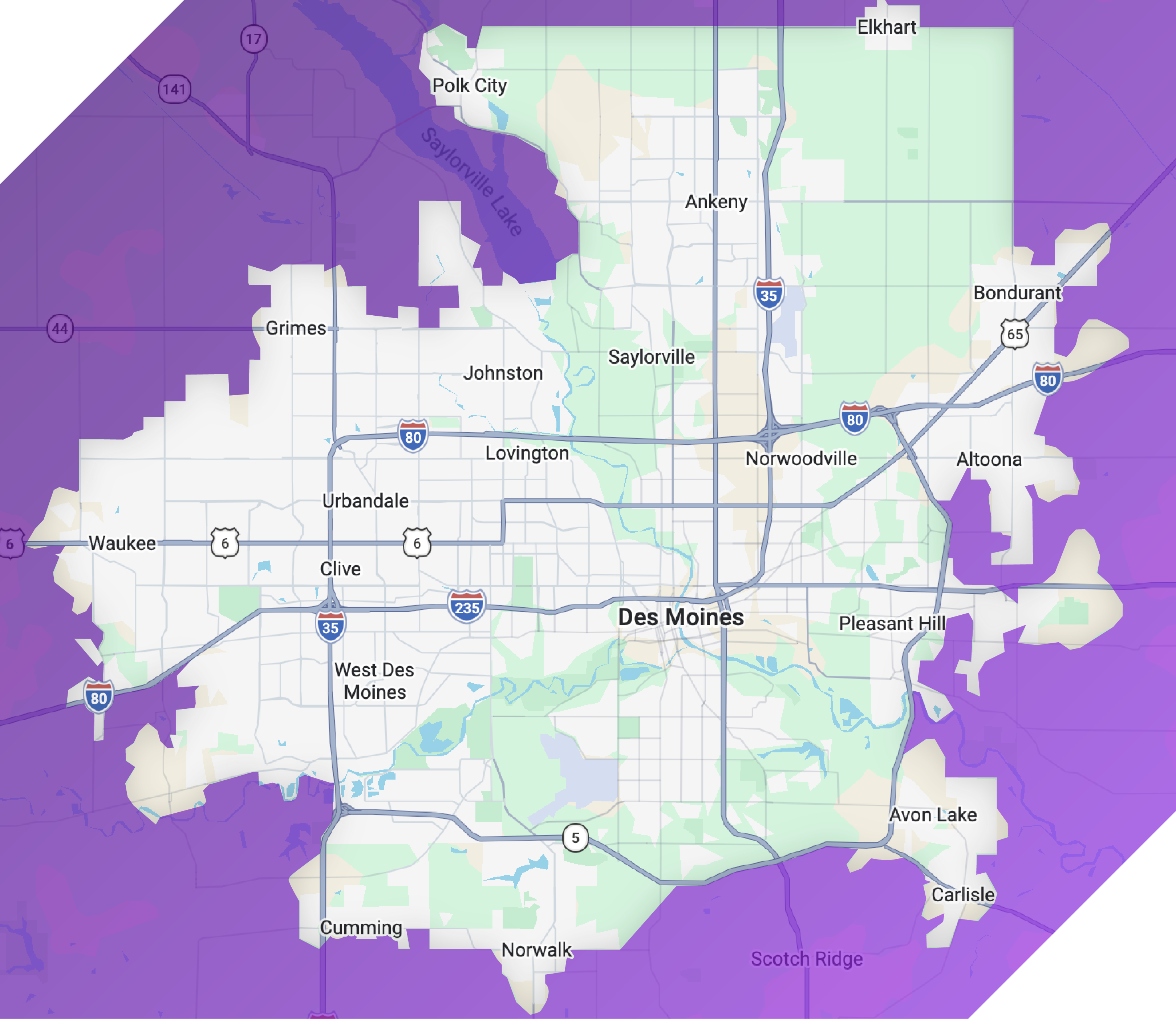
Obsidian Heating and Cooling gas piping repair service area map covering Greater Des Moines
Our Service Areas

Service Areas for Gas Piping Repair

We provide same-day or next-day repair service in Des Moines and surrounding communities.

Emergency Response Available In:

Quick Response Time

We serve this area daily for repairs and service calls — experienced with Ankeny's housing types and local utility requirements.

Established Service Area

Regular service area with rapid response capability — familiar with common gas line issues in this region.

Emergency Gas Line Repair?

If you smell gas or have a heating emergency, don't wait. Call us immediately at 515-599-8488 for same-day response when possible.

Related Services

Related Heating & Cooling Services

Complete HVAC solutions for your home's comfort and safety.

Furnace Repair & Service

If your furnace won't ignite or run, the problem might be gas supply or furnace-related; we diagnose both. Expert repair for all furnace types and brands.

Schedule Furnace Repair

Furnace Installation & Replacement

If pipe damage occurs during old furnace removal or you're upgrading your system. Complete installation with gas line connections.

Get a New Furnace Installed

Boiler Repair & Service

Gas-fired boilers depend on steady gas supply; we repair both boiler and piping issues. Expert service for all boiler systems.

Schedule Boiler Repair

Heat Pump Installation & Replacement

If you're considering switching from gas to electric heating, we offer heat pump alternatives. Efficient heating and cooling in one system.

Explore Heat Pump Options

Gas Piping Installation

For new installations or full line replacement, we handle the complete project. Professional gas line installation with proper permits and testing.

Get New Gas Lines Installed
Answering Your Questions

Frequently Asked Questions About Gas Piping Repair

Trust your nose. If you smell rotten eggs or sulfur, there's a leak. You might also hear a hissing sound at a connection. If you suspect a leak, exit your home, don't use electronics, and call us or your gas utility from outside. Don't assume it will go away — gas leaks are safety hazards.

They can be if done incorrectly. That's why you need a professional who knows how to safely isolate the gas, make repairs without introducing sparks or ignition sources, and pressure-test to ensure the system is airtight. We follow all safety protocols to protect your home and family.

It depends on the problem. A loose fitting might take 30 minutes. A short corroded section might take 1–2 hours. A longer replacement could take several hours. We give you an estimate once we diagnose the issue. For safety-critical leaks, we make emergency response a priority.

Typically, yes, but only for the duration of the repair. We isolate the problem area using valves so the rest of your home's gas service may continue (though we often shut down the whole system for safety during major repairs). Once the repair and testing are complete, gas service is restored immediately.

Some do, depending on local code. Simple repairs like resealing a connection usually don't. Replacing a section of pipe typically requires a permit and inspection. We'll tell you upfront whether a permit is needed and will pull it on your behalf if necessary.

We pressure-test it, perform a bubble test, and verify with live gas that it's airtight. We also test your appliance to ensure it ignites and runs normally. You get a written report of our findings and test results. The system is safe and certified.

We respond to emergency calls whenever possible, including nights and weekends, especially during heating season. If your furnace won't light or you smell gas at an unusual hour, call 515-599-8488 and describe the situation. We'll advise you on immediate steps and dispatch a technician if it's urgent.

If corroded or damaged pipe is embedded in a wall and can't be reached without major demolition, we may recommend replacing that section with new routing — running the line externally or through a different path. We'll assess the situation and give you your options.

That depends on the extent of corrosion and the line's age. If it's a single small section and the rest is sound, targeted replacement is cost-effective. If the whole line is corroded, replacement may be more economical long-term. We'll give you both options and explain the trade-offs.

We recommend an annual safety inspection as part of your furnace or boiler maintenance tune-up. During this visit, we check for corrosion, loose connections, and other hazards. Catching small problems early prevents breakdowns and safety issues.
Ready to Get Started?

Get Emergency Gas Piping Repair in Des Moines

Gas line problems are safety hazards that need prompt, professional attention. At Obsidian Heating and Cooling, we respond to emergency calls, diagnose quickly, and repair properly. We pressure-test every repair and provide written certification so you know the system is safe.

Whether you smell gas, your furnace won't light, or you see visible damage to piping, don't wait. Call us immediately at 515-599-8488 or schedule an emergency repair. We serve Des Moines, Ankeny, Urbandale, Altoona, Grimes, and Clive, and we can usually dispatch a technician the same day.
Same-day response when possible for gas line emergencies. Don't wait if you smell gas or have heating problems.

We offer financing options for larger repairs if you need to spread the cost over time. Ask about our current specials.

Join our annual maintenance plans to catch problems early before they become emergencies.
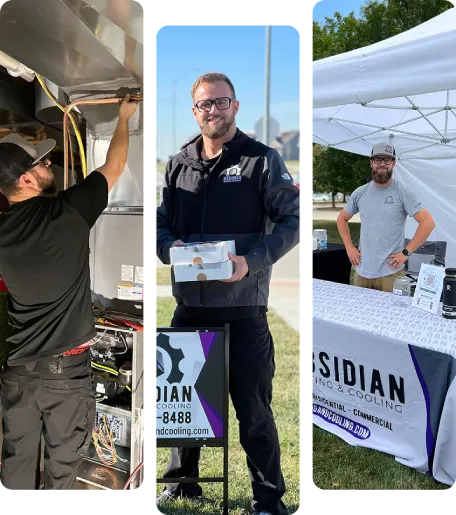
Obsidian Heating and Cooling team serving Des Moines, IA
More Gas Piping Services

Explore All Gas Piping Services

See everything we handle for gas piping systems, or jump straight to a related service.

© Red Barn Media Group 2026