
Boiler Repair & Service in Des Moines, IA
Your boiler isn't producing heat—and you need warmth restored now. Obsidian Heating and Cooling has been the trusted boiler repair specialist for Des Moines homeowners since 2009, offering rapid diagnosis, honest recommendations, and same-day emergency service when winter heating fails. Whether your boiler won't fire, is leaking water, has low pressure, or is making unusual noises, our veteran-owned team of expert technicians knows exactly how to diagnose the problem and restore heat to your home. We're a Tempstar Elite Dealer with direct manufacturer support and immediate access to OEM parts—meaning we can often fix your boiler faster than shops that have to source components through regional distributors.

Up to 15-Year Warranty
Parts & Labor
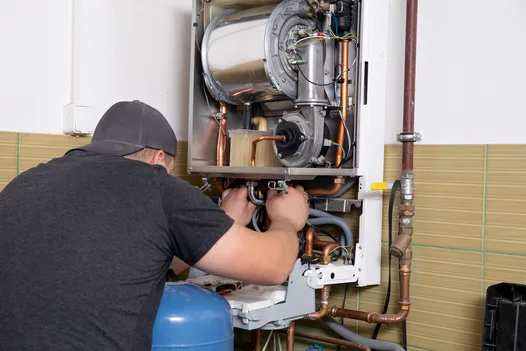
What Sets Our Boiler Repair Service Apart
Get Emergency Boiler Repair Service
Don't suffer without heat. Contact us now for same-day or emergency service:
Warning Signs Your Boiler Needs Professional Repair
Boiler Won't Fire (No Pilot Light, No Heat)
If you've adjusted the thermostat and the boiler still isn't producing heat, the issue is likely electrical or fuel-related. Start by checking the circuit breaker—a tripped breaker will prevent any operation. Check that the thermostat is actually set to "Heat" and is above room temperature. Look for a flame in the boiler's inspection window (if visible) or listen for the sound of the burner firing when you raise the thermostat. If the boiler is completely silent, the problem could be a failed ignition control (the electronic device that lights the burner), a broken gas valve, a faulty thermostat, or an electrical disconnect that's been triggered. Don't delay—prolonged exposure to cold can damage your home and endanger your family.
Low Water Pressure (Gauge Reading Below 12 PSI)
Boiler water pressure typically sits between 12–30 PSI depending on your system height. If your gauge reads below 12 PSI, the system has lost water—either through a slow leak, bleeding of the system during service, or through the relief valve if pressure spiked. Low pressure will trigger a safety cutoff (low-water-cutoff switch) that prevents the boiler from firing and damaging itself. You might be able to add water yourself using the fill valve (if you know its location), but if pressure drops again shortly after, there's a leak that needs professional repair. A leak could be at a connection, in the piping, at the pump seal, or in the heat exchanger—we'll find it and fix it.
Water Leaks (Puddles Under Boiler, Wet Pipe Connections, Drips)
Leaks are one of the most common boiler problems and often signal imminent failure if ignored. Small drips at connections might be tightened or have a fitting replaced. Larger leaks suggest corrosion of the heat exchanger, cracks in the boiler jacket, or failed pump seals. A leak reduces water volume, drops system pressure, and triggers the low-water-cutoff safety switch, shutting the boiler down. Continuing to run a leaking boiler causes further damage. We'll pinpoint the leak location and repair it before your system is damaged beyond recovery.
Unusual Noises (Banging, Kettling, Grinding, Hissing)
Your boiler should run quietly. Banging or "kettling" (like a kettle boiling) usually means scale buildup on heating surfaces or cavitation (imploding bubbles in the water) from circulation problems. Grinding sounds might indicate a failing circulating pump. Hissing could be steam escaping from a connection or relief valve. Each noise type points to a specific problem that gets worse if ignored. We'll listen to your system, identify the source, and correct it before damage escalates.
No Heat in Some Radiators or Baseboard Sections
If part of your home is cold while other areas are warm, the problem usually involves circulation or a stuck zone valve. Air trapped in the piping can block circulation to certain zones—we can bleed the system to remove air. A zone valve might be stuck open or closed, directing water away from certain areas. A circulation pump might be failing, reducing water flow to distant zones. In some cases, piping has corroded or developed a blockage that prevents water from reaching certain radiators. We'll systematically test pressure and temperature in different zones to pinpoint the problem.
Recurring Low Pressure or Water Loss
If your pressure gauge keeps dropping and you have to repeatedly add water, your system is losing water continuously. This points to a slow leak somewhere in the piping, at the pump, in the heat exchanger, or at zone valve connections. Slow leaks are often hidden (inside walls, under the boiler, or in concealed piping) but show up clearly in our pressure testing. We use specialized leak detection techniques to locate even small leaks and repair them before your boiler is damaged.
How We Diagnose and Repair Your Boiler System
From the first assessment to the final testing, every step is handled with precision and care. Here's what to expect when you choose Obsidian Heating and Cooling for your boiler repair.
Safety Assessment & Intake Interview
When you call, we ask qualifying questions: Is the boiler completely unresponsive? Is there water leaking? Are there unusual sounds or smells? Does the system have pressure or is the gauge reading low? This helps us understand the severity and dispatch the right technician with the right tools. When our technician arrives, they'll immediately assess for safety hazards—gas leaks, carbon monoxide risk, electrical hazards, or active water leaks. Boiler safety is paramount because heating systems involve combustion and pressurized water.
We'll inspect the boiler room for obvious problems: the condition of piping connections, whether the expansion tank looks intact, whether there's visible water damage or corrosion, and whether the boiler has any visible cracks or damage. We'll check that the power switch is on and the circuit breaker hasn't tripped. If we detect a hazard, we'll shut the system down safely and explain what needs to happen next.
What We Check First
Detailed Intake Questions
Assess severity and dispatch right technician.
Safety Hazard Inspection
Gas leaks, CO risk, electrical hazards.
Power & Breaker Check
Verify electrical supply and switches.
Pressure Gauge Reading
Check system pressure and thermostat.
Visual Damage Assessment
Look for leaks, corrosion, component failure.
Safety Shutdown Protocol
Secure system if hazards detected.
Pressure, Temperature & Electrical Testing
This is where systematic diagnosis begins. We attach a pressure gauge to the boiler if one isn't visible and record the reading—normal range is 12–30 PSI depending on your system. We check the boiler's water temperature using an infrared thermometer or the display on the boiler itself (many modern units show operational data). We use a digital multimeter to test electrical voltage at the thermostat, control board, and gas valve to confirm proper power supply.
If the boiler won't fire, we test whether the ignition control is getting power and sending a signal to the gas valve. We listen for the sound of the gas valve opening (a clicking or solenoid engagement sound). We might use a combustion analyzer (if we suspect the burner is firing) to measure exhaust gas and verify safe operation. We also inspect the thermostat to confirm it's actually calling for heat and communicating with the boiler's control system.
Diagnostic Testing
Water Pressure Measurement
Record system pressure at gauge.
Temperature Recording
Check water temp vs. normal range.
Electrical Voltage Testing
Test thermostat, control, and valve power.
Ignition Control Test
Verify power and signal to gas valve.
Combustion Analysis & Gas Supply Verification
If the boiler appears to be firing, we perform a combustion analysis—a critical safety test that measures exhaust gas temperature, oxygen content, and carbon monoxide levels. This verifies that the burner is operating safely and efficiently. Improper combustion can produce dangerous carbon monoxide, which is invisible and deadly. A combustion analyzer confirms that the gas flame is stable, the air-fuel mixture is optimized, and all exhaust products are venting safely.
We'll also verify the gas supply to the boiler—checking for proper pressure at the inlet, testing that the gas shutoff valve is accessible and functional, and inspecting the gas line for damage or corrosion. If the gas pressure is too high or too low, the burner won't fire properly, and we'll coordinate with your gas utility if needed.
Safety Verification
Complete Combustion Analysis
Measure exhaust gas and temperature.
Carbon Monoxide Testing
Verify CO levels below safe limits.
Gas Pressure Testing
Check pressure at boiler inlet.
Gas Shutoff Valve Test
Verify accessibility and function.
Gas Line Inspection
Check for damage or corrosion.
Results Documentation
Record all findings for your records.
Component Repair or Replacement
Once we've identified the problem, repair or replacement happens. Common boiler repairs include ignition control replacement (failed electronic ignition), gas valve repair or replacement (stuck or failed valve), thermostat repair or upgrade (faulty sensor or control), circulating pump replacement (failed motor or seal), expansion tank replacement (failed diaphragm), relief valve adjustment or replacement (improper pressure setting or stuck valve), or heat exchanger repair (soldering of small leaks—though major cracks usually require boiler replacement).
We source OEM parts when possible, especially for Tempstar systems where we have direct dealer access. Installation follows manufacturer specs exactly. All work involving gas connections is pressure-tested for safety. All electrical work is documented and verified for proper operation.
Repair Standards
OEM Parts When Available
Tempstar and compatible systems priority.
Manufacturer Specifications
Install per exact factory specs.
Pressure Testing
All gas and water connections tested.
Work Documentation
All parts and labor documented.
System Testing, Verification & Your Maintenance Plan
Before we leave, we run your boiler through a complete heating cycle. We confirm pressure and temperature are stable within normal range. We verify the thermostat is controlling the boiler properly—the boiler should fire when temperature drops below setpoint and cut off when setpoint is reached. We check that all zone valves (if present) are directing water correctly. We walk you through operation: what pressure reading is normal, what temperature the water should be, how to recognize warning signs, and what to do if the boiler stops working (check pressure first; if low, call us; if normal but no heat, call us).
You'll receive a detailed invoice with all repairs performed, parts replaced, and labor hours documented. We'll discuss water treatment if appropriate and establish a preventive maintenance schedule. We strongly recommend an annual fall tune-up before heating season begins—this prevents most common failures and extends your boiler's lifespan.
Before We Leave
Pressure Verification
Confirm normal range operation.
Complete Heating Cycle
Test full operation smoothly.
Detailed Documentation
All work and parts documented.
Maintenance Plan Setup
Prevent future failures.
Common Boiler Repairs We Handle
Ignition Control or Spark Electrode Failure
If your boiler won't fire at all despite proper gas supply and electrical power, the ignition control (the electronic device that creates the spark) has likely failed. We test the control with diagnostic equipment, confirm it's not receiving a signal or not sending one to the electrode, then replace it with an OEM equivalent. This repair typically takes 1–2 hours and is one of the most affordable fixes.
Schedule Ignition RepairGas Valve Repair or Replacement
A failed gas valve won't allow fuel to flow to the burner, stopping heat production. We test valve operation electrically and mechanically, determine whether a stuck valve can be cleaned or needs replacement, and install the correct OEM part. Gas valve work requires precision and pressure testing to ensure safety.
Get Gas Valve ServiceThermostat Repair or Upgrade
A faulty thermostat won't communicate with the boiler's control system, preventing the boiler from knowing when to fire. We test thermostat sensors, wiring, and signal to the boiler. If the thermostat has failed, we can replace it with a compatible unit or upgrade to a smart thermostat for better temperature control.
Arrange Thermostat ServiceCirculating Pump Repair or Replacement
The circulating pump moves heated water through your baseboard, radiators, or radiant floor system. A failed pump produces little or no water circulation, leaving your home cold despite the boiler firing. We test pump operation, determine if it's a motor failure or seal leak, and replace it if necessary. Pump replacement typically takes 2–3 hours.
Schedule Pump ServiceExpansion Tank Replacement
The expansion tank absorbs water expansion as it heats, preventing dangerous pressure buildup. A failed tank (interior diaphragm rupture) allows water to enter the tank, compressing air and causing pressure spikes. We inspect, test, and replace failed expansion tanks with proper pre-charging to your system's specifications.
Discuss Expansion Tank OptionsPressure Relief Valve Adjustment or Replacement
A relief valve that's stuck open will constantly leak water, dropping system pressure. A valve set too high allows pressure to build dangerously. We test valve operation, adjust the pressure setting if it's just misaligned, or replace the valve if it's stuck or internally failed.
Get Relief Valve ServiceHeat Exchanger Leak Repair
Small leaks in the heat exchanger can sometimes be soldered and repaired. Larger leaks or cracks usually require heat exchanger replacement, which is more involved but necessary to restore operation. We evaluate the leak location and severity and discuss repair vs. replacement options.
Schedule Heat Exchanger AssessmentWater Treatment & Corrosion Prevention
Untreated boiler water develops scale and corrosion, shortening component lifespan and reducing efficiency. We test your water chemistry, recommend a corrosion inhibitor or softening system, and establish a treatment program. This preventive approach prevents many future repairs.
Get Water Treatment Service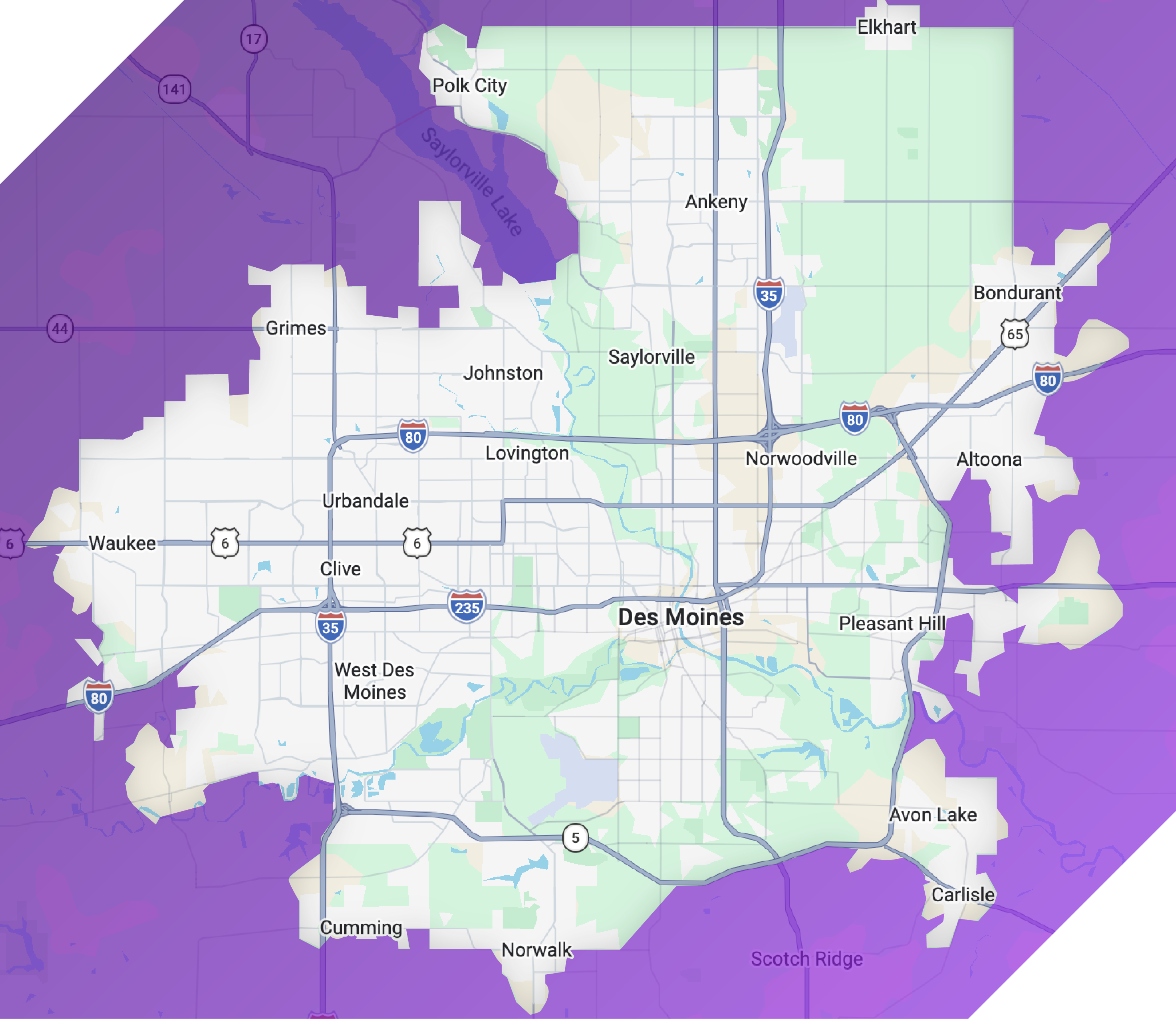
Boiler Repair Service Throughout Des Moines Metro
We provide same-day and emergency boiler repair across Des Moines and surrounding communities:
Serving Our Neighbors in & Around:
Ankeny, IA
North metro Des Moines residents trust us for rapid boiler repair and emergency response. We maintain fast dispatch times and carry common boiler parts to minimize your time without heat.
Urbandale, IA
Throughout northwest Des Moines and Urbandale, we repair and maintain boiler systems in older homes, newer construction, and everything in between. Our technicians understand the area's housing stock and hydronic system types.
Altoona, IA
Southeast of Des Moines, we provide same-day repair and emergency availability. Altoona homeowners call us first for boiler problems because we deliver expertise with speed.
Grimes, IA
North of Des Moines, Grimes residents trust us for boiler repairs they can count on. We understand Iowa winters and the urgency of restoring heat.
Clive, IA
West of Des Moines, we repair boiler systems in Clive's established neighborhoods and newer subdivisions. Our 15 years of local experience means we've serviced virtually every boiler type in the area.
Keep Your Boiler System Running Smoothly
Beyond repair, we offer complete boiler care:
Boiler Maintenance & Tune-Up
Annual service prevents most repairs and extends system lifespan. Our comprehensive tune-up includes combustion analysis, water treatment, and safety testing.
Schedule Boiler MaintenanceFurnace Repair & Service
We repair forced-air heating systems as well as hydronic boilers. Not sure which you have? See our boiler vs. furnace compared guide. Expert diagnosis and same-day service for all heating system types.
Get Furnace Repair ServiceHeat Pump Repair
Systems that provide both heating and cooling year-round. Expert repair for all heat pump brands and models.
Schedule Heat Pump RepairCentral AC Repair
Paired with your boiler for complete seasonal comfort. Fast diagnosis and repair of all air conditioning issues.
Get AC Repair ServiceMini-Split Repair
Ductless systems for zone heating and cooling. Expert repair and maintenance for all mini-split brands.
Schedule Mini-Split RepairFrequently Asked Questions About Boiler Repair
Your Boiler Repair Specialist in Des Moines
When your boiler breaks down, you need a team that understands hydronic systems, responds fast, and explains everything clearly. Obsidian Heating and Cooling is that team. We've been serving Des Moines homeowners for 15 years with expert diagnosis, honest recommendations, and same-day emergency service when heat fails.
Our veteran-owned technicians are Tempstar Elite Dealers with direct manufacturer support. We have the tools, the training, and the experience to fix your boiler—or help you decide if replacement makes sense. We'll restore your heat, explain what happened, and recommend preventive steps so the problem doesn't happen again.
We offer flexible financing options to make major repairs more affordable, and we recommend joining our maintenance plan to prevent future emergencies. Many customers find that an annual tune-up saves them thousands in repair costs over the life of their system.
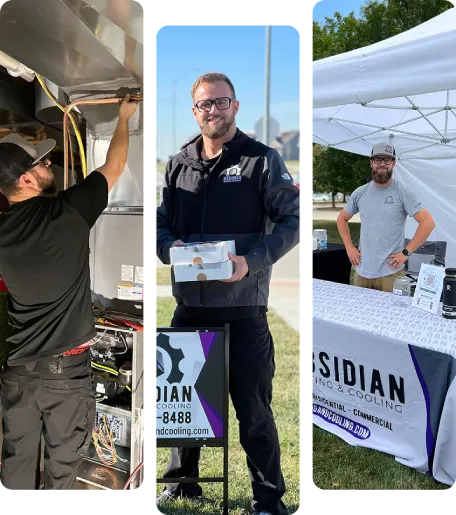
Explore All Boiler Services
See everything we handle for boiler systems, or jump straight to a related service.