
Boiler Maintenance & Tune-Up in Des Moines, IA
Your boiler is the hardest-working system in your home during Iowa's long heating season. Regular maintenance keeps it running smoothly, catches problems early, and prevents the breakdowns that leave families cold when they need heat most. Obsidian Heating and Cooling has been the trusted boiler maintenance specialist for Des Moines homeowners since 2009, offering comprehensive annual tune-ups, water chemistry management, and seasonal readiness inspections. Whether you're protecting a new system investment or extending the life of an older boiler, our veteran-owned team knows exactly what hydronic systems need to operate reliably season after season. We're a Tempstar Elite Dealer with manufacturer-level technical knowledge—meaning we understand not just how to inspect your boiler, but how to keep it operating at peak efficiency and safety.

Up to 15-Year Warranty
Parts & Labor
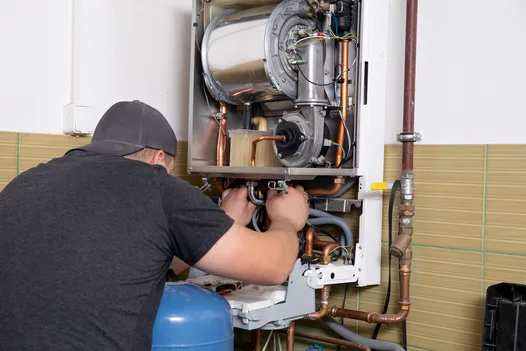
Why Schedule Boiler Maintenance Every Fall
Get Your Boiler Ready for the Heating Season
Don't wait for a breakdown—schedule preventive maintenance now:
Our Comprehensive Boiler Maintenance Process
From initial inspection to detailed documentation, every step is handled with precision and care. Here's what to expect when you choose Obsidian Heating and Cooling for your boiler maintenance.
System Intake & Visual Inspection
When we arrive for your maintenance appointment, we begin by understanding your boiler's recent history. Have you noticed any changes—unusual sounds, pressure fluctuations, cold areas in your home, or water leaks? Have you needed boiler repair & same-day service in the past year? What's the boiler's age and brand? We review the boiler's nameplate to confirm model, manufacturing date, capacity (BTU), and fuel type. We photograph the installation for our records.
Then comes the visual inspection—the foundation of proper maintenance. We inspect the boiler for visible damage: cracks in the jacket, corrosion on external surfaces, signs of leaks around connections, discolored paint (which can indicate heat stress), and overall cleanliness of the boiler room. We check that gas connections are tight and show no signs of corrosion or damage. We verify the electrical power switch is accessible and working. We examine expansion tank condition—looking for rust spots, damage, or signs that the tank itself may be failing.
What We Inspect
System History Interview
Recent behavior and repair history.
Installation Photography
Documenting boiler and installation details.
Visual Damage Inspection
Cracks, corrosion, and component damage.
Gas Connection Check
Tight connections and corrosion assessment.
Combustion Analysis & Burner Inspection
A properly burning boiler is a safe boiler. We perform a complete combustion analysis—a test that measures how clean and safe your boiler's flame is. We use a combustion analyzer to measure exhaust temperature (should be 300–500°F depending on boiler type; higher temps suggest scale buildup or failing heat exchanger), oxygen content in exhaust (indicates whether the air-fuel mixture is optimized), carbon monoxide levels (must be zero or near-zero; any detectable CO is a safety hazard), and draft pressure (ensures exhaust gases are venting properly—improper draft can cause combustion byproducts to spill back into your home).
We'll also inspect the burner visually—checking for scale, soot, or debris that might be reducing efficiency or causing incomplete combustion. We'll verify that the ignition control or spark electrode is clean and firing consistently. We'll listen to the burner for unusual sounds and observe the flame color (should be blue, not yellow or orange). If we detect any combustion problem, we'll explain it clearly and discuss whether cleaning, adjustment, or component replacement is needed.
Combustion Testing
Exhaust Temperature
Measuring combustion gas composition.
Carbon Monoxide Test
Critical safety check for CO levels.
Draft Verification
Proper exhaust venting confirmed.
Burner Inspection
Scale, soot, and ignition control check.
Pressure, Temperature & Electrical Function Testing
Boilers operate within narrow parameters—proper pressure prevents damage; proper temperature ensures comfort and safety. We test your system's vital signs: water pressure at the boiler gauge (should be 12–30 PSI depending on system height; we test whether pressure holds steady or drops over time, which would indicate a slow leak), water temperature at operating condition (should be 160–180°F for baseboard systems, lower for radiant floor; we verify the boiler reaches setpoint and cycles properly), and thermostat operation (we test that the thermostat accurately reads room temperature, responds to setpoint changes, and reliably signals the boiler to fire when needed).
We also check electrical voltage at the control board, gas valve, and ignition control (confirms proper power supply and circuit function), circulating pump performance (we verify water is actually circulating through the system—listening for pump operation, checking for flow to all zones, and testing for unusual vibration or noise), and safety interlocks (we verify that high-temperature limit switches, low-water-cutoff switches, and flame-sensing devices all function correctly—these are critical protection mechanisms that shut the boiler down if something goes wrong).
System Testing
Water Pressure Test
Pressure stability and leak detection.
Temperature Verification
Setpoint accuracy and cycling.
Electrical Testing
Voltage at all critical circuits.
Circulating Pump
Flow verification and noise check.
Safety Interlocks
All protection mechanisms tested.
Results Documentation
All measurements recorded and compared.
Water Chemistry Analysis & Treatment Recommendations
The water inside your boiler is corrosive—it contains dissolved oxygen, minerals, and potential scale-forming compounds. Untreated boiler water accelerates corrosion, causes scale buildup on heating surfaces (reducing efficiency), and shortens component lifespan. We test your water chemistry and recommend appropriate treatment: we draw a water sample and test for pH (should be 7–11 for untreated boiler systems), measure hardness (mineral content that can cause scale), test for dissolved oxygen (which causes rust and corrosion), check for signs of previous treatment (inhibitor presence, softening effectiveness), and assess whether your current treatment program (if any) is working.
Based on our findings, we'll recommend a treatment strategy. Common options include boiler treatment chemicals (corrosion inhibitor, oxygen scavenger) added annually to suppress rust and oxygen, water softening (if your water is hard, softening prevents scale on heating surfaces), and system flushing (if scale has already accumulated, we can drain and flush the system to remove deposits). We'll discuss costs, frequency of treatment, and expected benefits (longer component lifespan, improved efficiency, fewer breakdowns). This is an investment in longevity—systems with proper water treatment last 20+ years; untreated systems often fail in 10–12.
Water Analysis
Water Sample Collection
Direct from boiler system.
pH Testing
Hardness and dissolved oxygen levels.
Treatment Evaluation
Current program effectiveness.
Treatment Schedule
Periodic water testing plan.
Documentation, Training & Your Maintenance Plan
Once we've completed all inspections, tests, and diagnostics, we summarize everything in a detailed written report. You'll receive a list of what we inspected and tested, all measurements and readings (pressure, temperature, combustion analysis, electrical), a clear assessment: what's operating normally, what's showing minor wear, what needs attention soon, and any safety concerns, specific recommendations for repairs, treatment, or next steps, and a forecast for system longevity (how many more years your boiler should last with proper maintenance).
We'll walk you through the report, explain what everything means, and answer your questions. We'll discuss your boiler's condition and whether you should begin budgeting for eventual replacement (typically 15–20 years for well-maintained systems). If you're interested in our maintenance plan, we'll explain how automatic scheduling can protect your investment and give you priority emergency service when needed. We'll also establish a maintenance schedule moving forward—typically an annual fall tune-up before heating season, plus whatever water treatment or repairs are needed based on this year's findings.
What You Receive
Comprehensive Report
All findings and measurements documented.
Clear Explanations
Non-technical language walkthrough.
Maintenance Schedule
Annual fall tune-up planning.
Emergency Support
After-hours contact information.
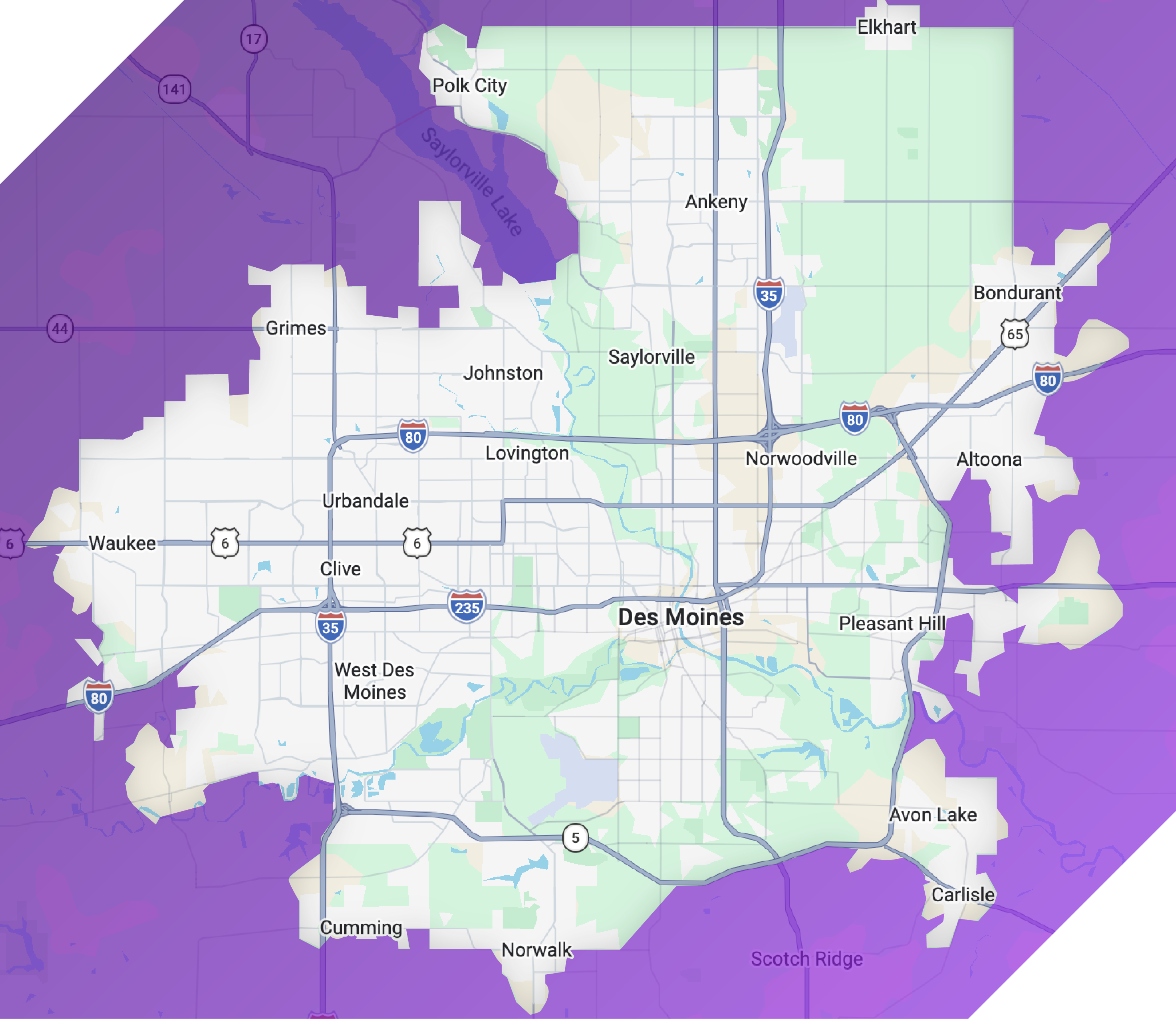
Boiler Maintenance Service Throughout Des Moines Metro
We provide fall maintenance tune-ups across Des Moines and surrounding areas:
Serving Our Neighbors in & Around:
Ankeny, IA
North metro Des Moines homeowners trust us for seasonal boiler maintenance. We schedule fall appointments efficiently to serve the whole Ankeny area before winter arrives.
Urbandale, IA
Throughout northwest Des Moines and Urbandale, we offer flexible scheduling for boiler tune-ups. Early-season appointments ensure your system is ready before the cold hits.
Altoona, IA
Southeast of Des Moines, we help homeowners keep boilers running reliably through Iowa winters with comprehensive maintenance programs.
Grimes, IA
North of Des Moines, Grimes residents rely on our fall maintenance to prevent winter emergencies. We understand the urgency of winterizing your heating system.
Clive, IA
West of Des Moines, we service boilers in Clive neighborhoods with the same attention to detail and thoroughness our customers expect year-round.
Not Sure If We Service Your Area?
We're dedicated to serving Greater Des Moines and our surrounding communities. Give us a call if you're not sure if we come to you—chances are we do.
Complete Boiler Care Beyond Maintenance
We provide more than maintenance:
Boiler Repair & Emergency Service
When something breaks, we're ready with fast diagnosis and repair. Don't wait for a complete breakdown when you notice problems.
Schedule Boiler RepairHeat Pump Maintenance
Keep heat pump systems running smoothly with seasonal tune-ups. Dual-season systems need specialized maintenance.
Heat Pump MaintenanceFurnace Maintenance & Tune-Up
Forced-air heating systems need annual service too. Keep your furnace running efficiently all winter long. New to hydronic heat? Read our boiler vs. furnace compared guide.
Schedule Furnace MaintenanceIndoor Air Quality Testing
Evaluate your home's air quality and ventilation while maintaining heating systems. Clean air is part of complete comfort.
Improve Your Indoor Air QualityCentral AC Maintenance
Pair boiler maintenance with summer AC service for year-round system care. Complete HVAC maintenance programs available.
Schedule AC MaintenanceMini-Split Maintenance
If you have ductless systems, they need maintenance too. Keep your mini-splits running efficiently year-round.
Mini-Split MaintenanceFrequently Asked Questions About Boiler Maintenance
Protect Your Boiler Investment With Annual Maintenance
Your boiler works hard for months every year to keep your family warm. Regular maintenance ensures it operates safely, efficiently, and reliably. Obsidian Heating and Cooling has been the trusted maintenance specialist for Des Moines homeowners since 2009. We perform comprehensive annual tune-ups that catch problems early, optimize your system's performance, and protect your long-term investment.
Our veteran-owned team is Tempstar Elite Dealers with manufacturer-level expertise. We understand what every component should do and when it's showing wear. We test for safety hazards, analyze your water chemistry, and provide a clear roadmap for keeping your boiler running strong for years to come.
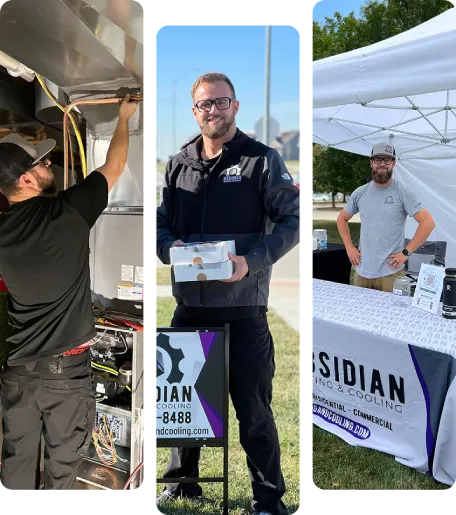
Explore All Boiler Services
See everything we handle for boiler systems, or jump straight to a related service.